


How large should a wardrobe be for 2 people?
Looking for a new wardrobe for two people in your home? It sounds romantic, but it can quickly become a challenge. Not having enough storage can lead to frustration fast, while a wardrobe that's too large wastes valuable floor space. We'll show you how to find the perfect size and what really matters when buying your wardrobe – so your dreams of organization and style come true.
Table of contents
- What dimensions should a wardrobe for two people have?
- Common wardrobe sizes for 2 people at a glance
- Interior layout: How to make optimal use of your wardrobe space
- Organization in your wardrobe with smart interior dividers
- Additional pro tips for perfect wardrobe interior layout
- Comparison of different wardrobe types for 2 people
- Wardrobes with sliding doors? Not at mokebo
- Modular & individual – The perfect configuration of your wardrobe
- Materials: The right finish for your wardrobe
- Wardrobe chaos no more: Mistakes to avoid
- Conclusion: Planning the perfect wardrobe for two people
- Frequently asked questions about the 2-person wardrobe
What dimensions should a wardrobe for two people have?
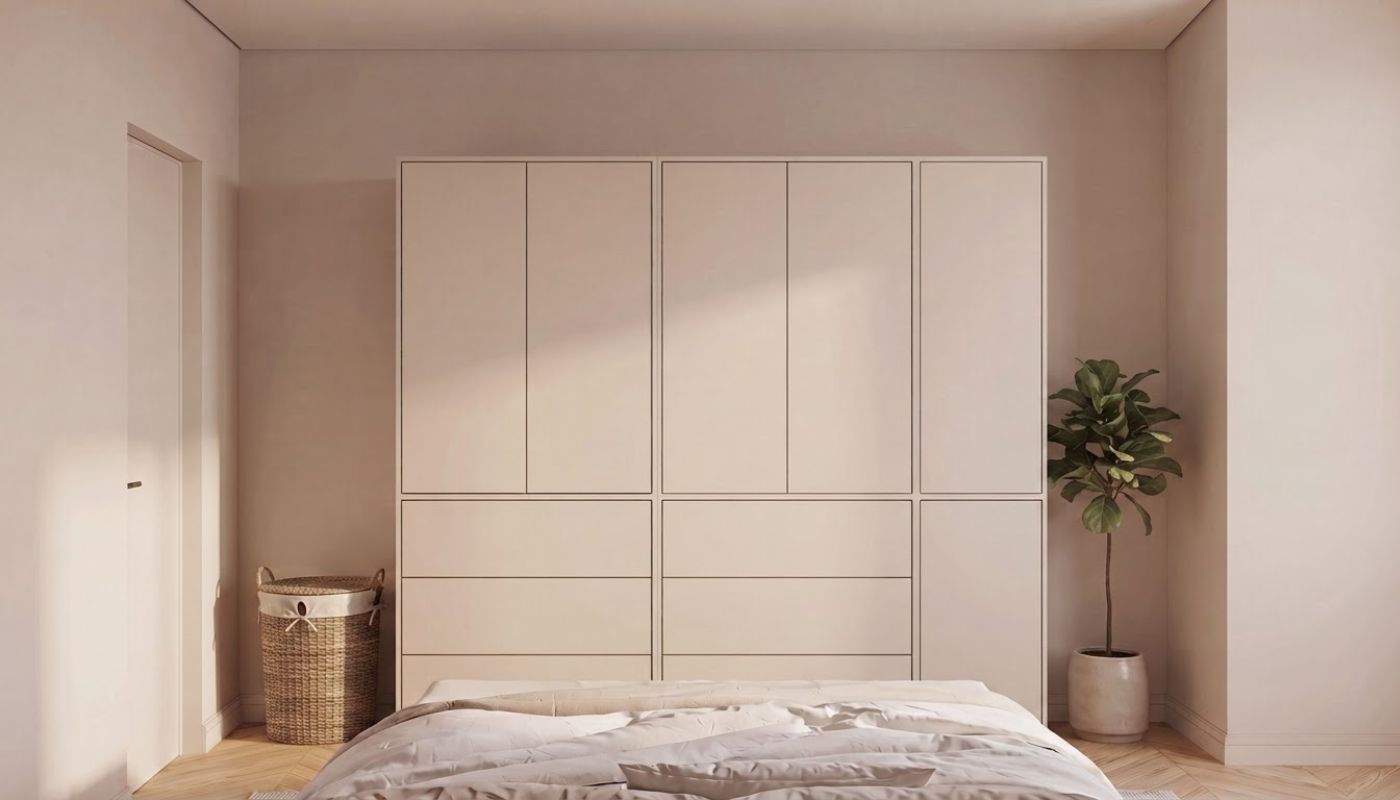
As a rule of thumb: A wardrobe for two people should be at least 240 cm wide. This width is roughly equivalent to a 3-door bedroom wardrobe and provides enough storage to accommodate clothing, accessories, and personal preferences well. If you own particularly many clothes or want to use the dressing room too, you should plan a bit more generously.
 View all wardrobes11 models · modular and combinable
Two wardrobe units of 1.20 meters each, totaling 240 cm, have proven practical. This option is not only convenient because it divides well – for example, if one person prefers drawers and the other prefers shelves – but also offers benefits in case of a move. The individual units can be flexibly reused, for example as a hallway cabinet or a multi-purpose cabinet.
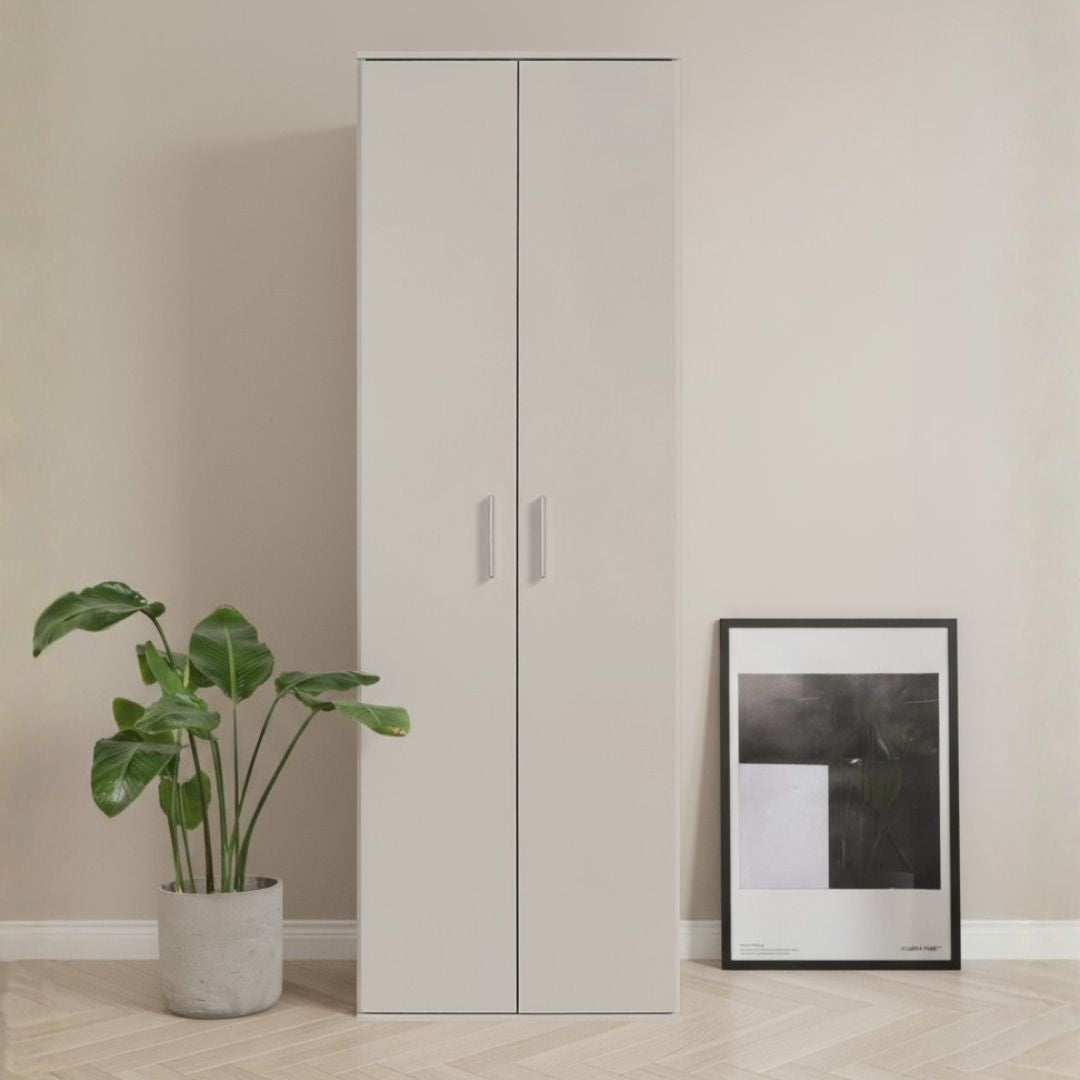
For reference: A wardrobe with 125 cm width works well for a single person – for two people it's far too small. A 2-door wardrobe can work under certain circumstances, for example with additional furniture like dressers or shelving units.

But what if your bedroom has limited space for a wardrobe?
Two-door wardrobes with a width of 210 cm can work for two people – particularly if you regularly declutter your wardrobe, organize it smartly, and use space-saving solutions like drawers, baskets, or vacuum storage bags. For minimalist couples or as a temporary solution, this option is definitely doable. Alternatively, corner wardrobes or modular wardrobe systems make it possible to use every corner of the room efficiently – ideal for small bedrooms with limited floor space.
Common wardrobe sizes for 2 people at a glance
Total wardrobe width: 210 to 300 cm
- 210 cm: A compact solution for small apartments and rooms or minimalist couples – here smart interior layout is key.
- 240 cm: Entry-level solution for couples with average storage needs
- 270 cm: More comfort with extra shelving and hanging space
- 300 cm: Ideal for fashion lovers or households with seasonally changing wardrobes
Total wardrobe height: 200 to 236 cm
- Provides space for double hanging rails
- Upper areas are ideal for rarely-used items or boxes
Total wardrobe depth: 58 to 62 cm
- 58 cm: Sufficient for standard hangers
- 62 cm: Allows for easier handling and provides better visibility
- Caution with less depth: Wider outfits can feel cramped
Tip: To ensure ideal storage, the German furniture industry association recommends one cubic meter of wardrobe space per person. For one person, that means a wardrobe of 100 cm width, 200 cm height, and 54 cm depth, for example. However, it's best to plan a bit more generously.
Interior layout: How to make optimal use of your wardrobe space
The right planning of your wardrobe with the 60-40 rule
Consider individual needs: The 60-40 split is especially practical if one of you owns more or larger pieces like long coats or suits. It lets you distribute available storage space fairly and according to actual needs, so neither of you has to compromise on space. The split can also be adjusted flexibly if your wardrobe changes over time.
Create clarity: Mark areas in the wardrobe clearly, for example with different colors, baskets, or boxes, so each person quickly knows which section is theirs. That keeps things organized and prevents clutter.

Organization in your wardrobe with smart interior dividers
| Area | Recommended share | Details & tips |
| Hanging area in your wardrobe | Approx. 50% | Ideal for shirts, blouses, dresses, skirts, and jackets. Plan at least one hanging rail for hanging clothes per person. If you own many blazers or dresses, allocate more hanging space with an additional rail. Special hangers for accessories like belts or scarves are practical. |
| Drawers & shelves in your wardrobe | Approx. 30% | Perfect for folded clothes like t-shirts, sweaters, and sportswear, as well as underwear and socks. Drawers with divider systems or small boxes provide organization. Stackable shelves help you make the most of space. It's especially useful to place basics and frequently-worn items at eye level (comfort zone 1). |
| Handy pants pull-out in your wardrobe | Additional | A pull-out pants holder prevents wrinkles and makes pants easy to access. For couples with many pants, a double pants pull-out or a combination of pull-out and shelf is recommended. |
| Upper area in your wardrobe | Approx. 10–15% | Seasonal outfits, travel bags, suitcases, or bedding find their place here. Clear boxes or storage containers help you keep track and store rarely-used items neatly. Vacuum storage bags save additional space. |
| Lower area in your wardrobe | Approx. 10% | Ideal for shoes, storage boxes, or extra drawers. Clear boxes allow quick access and prevent rarely-worn shoes or accessories from being forgotten. |
Additional pro tips for perfect wardrobe interior layout:
Pay attention to comfort zones: The so-called comfort zone is roughly between shoulder and hip height – and this area should be reserved in your wardrobe for outfits you use daily. In a well-organized wardrobe in your living room or bedroom, that's the functional zone – for example, for t-shirts, pants, and underwear. Rarely-used clothes like formal wear or seasonal items should be stored at the top or bottom of the wardrobe. A walk-in closet provides the perfect foundation to make optimal use of available space. Similar effects can be achieved with a spacious 3-door wardrobe or a sliding-door wardrobe. Pay attention to overall height, width, and depth to use all surfaces effectively.
Sort by type or color A good organization system creates clarity and saves time. Whether in a compact 2-door wardrobe or a spacious hinged-door wardrobe.
- Sort by type: e.g., business, casual, or sports – that makes selecting easier and brings structure to the space.
- Sort by color: creates not just organization but also design and harmony in the room. Especially with open furniture or wardrobes with glass fronts, this method ensures a particularly tidy look.
Flexible wardrobe layout: Depending on the size, model, and number of doors of your wardrobe, flexible interior layout is essential. Especially recommended are:
- Adjustable shelves to change shelf height based on clothing type – even with limited depth of around 55 cm or 60 cm.
- Hanging rails, ideally height-adjustable or double-installed – perfect for making optimal use of bedroom space.
- Modular inserts that bring organization to drawers or boxes and are easy to rearrange if needs change. This flexibility is a big advantage especially during seasonal changes or with a new wardrobe with individual requirements.
Make use of additional features: More storage with smart extras:
- Hooks or organizers on the inside of doors, ideal for accessories, belts, or bags.
- Hanging shelves and hanging systems in sliding-door wardrobes create organization without drilling.
- Small shelves or boxes in the right size help store jewelry, sunglasses, or watches in an organized way – especially in smaller versions with little depth.
Apply space-saving folding techniques: Whether in a compact 2-door wardrobe or a spacious walk-in closet – with the right technique, you can save a lot of space:
- Roll t-shirts or jeans instead of stacking – more fits in less space and you keep an overview.
- The KonMari folding method works for all wardrobe systems and increases functionality – especially in drawers and with limited space.
Comparison of different wardrobe types for 2 people
Hinged-door wardrobe
Hinged-door wardrobes are among the most popular bedroom furniture. With its classic hinge mechanism and clean design language, a hinged-door wardrobe fits harmoniously into various room concepts – whether modern, minimalist, or traditional. Especially for people who value easy handling, organized interiors, and a large selection of models, hinged-door wardrobes are the first choice. However, like any piece of furniture, this type has specific pros and cons worth weighing before you buy.
|
Pros |
Cons |
|
|
Sliding-door wardrobe
Sliding-door wardrobes combine stylish looks with functional sophistication. Especially in a bedroom with limited space, a sliding-door wardrobe is the smart choice: by sliding the doors sideways, it saves valuable floor space in front of the wardrobe and allows flexible room furnishing. Beyond its space-saving function, the sliding-door wardrobe stands out with a smooth, often reflective front that gives the room a calm and modern aesthetic. However, this popular wardrobe model has some quirks to consider when buying.
|
Pros |
Cons |
|
|
Walk-in closet
A walk-in closet is a dream come true for many. It not only creates a special room feeling but also offers maximum clarity and organization – a true space wonder for anyone who wants to present their outfits and accessories in an organized way. These can be displayed here openly and stylishly – almost like in a boutique. With individually customizable elements like shelves, hanging rails, and mirrors, you can tailor the walk-in closet to your exact needs. But as luxurious as it looks, the demands on space, planning, and budget are equally high. If you have enough room in your bedroom or a separate room available, a walk-in closet can be a real highlight.
|
Pros |
Cons |
|
|

Wardrobes with sliding doors? Not at mokebo
Sliding doors are often popular in small spaces because they don't need extra room to open. That makes them especially practical when space is tight. However, sliding doors also have drawbacks: you can usually only open one side of the wardrobe at a time, making the interior less flexibly accessible. Plus, the tracks require regular maintenance to keep everything running smoothly.
At mokebo, we instead focus on doors with or without mirrors, combined with practical drawers, because:
Mirror doors create the illusion of more space and are a real eye-catcher in the bedroom.
They open completely, so you can access the entire interior comfortably – no annoying sliding back and forth.
Our high-quality hinges and modern metal handle strips provide lasting stability, smooth opening, and a stylish look.
The integrated drawers offer extra storage for underwear, accessories, or folded clothes – perfectly organized and within easy reach.
That way, with mokebo you get not just a functional wardrobe, but a piece of furniture that simplifies your everyday life and visually upgrades your bedroom.
Modular & individual – The perfect configuration of your wardrobe
Your partner loves drawers, you prefer doors? No problem! At mokebo you can customize your wardrobe modularly – exactly the way it works for you.
Want more drawers for underwear, socks, and small accessories?
Your partner has lots of outfits to hang?
Or do you want a smart mix of both?
With our modular system, you build your wardrobe individually – including practical wardrobe toppers for extra storage, flexibly adjustable shelves for more organization and clarity, plus a wide selection of stylish furniture handles to put the finishing touch on your wardrobe.
So everyone gets their favorite spot, completely without compromises on storage, organization, or comfort.

Materials: The right finish for your wardrobe
The choice of material affects not just the look but also the durability and maintenance of your wardrobe:
Wood look: Conveys a natural and warm impression, is robust and versatile.
High gloss: Looks modern and elegant, is easy to clean, but can be more prone to scratches.
Glass fronts: Create an open and airy room feeling but are more delicate and require more cleaning.
Decorative finishes like white or vintage provide stylish accents – depending on taste and room concept.
A sturdy surface is crucial for your wardrobe's longevity, especially with daily use.
Wardrobe chaos no more: Mistakes to avoid
Not enough hanging space in your wardrobe
Assess your needs properly: Many underestimate how much space hanging clothes actually need. For shirts, blouses, and jackets, you should plan at least 60 to 80 cm of pure rod length per person. If you own many long dresses or coats, you'll need additional space with a higher-hanging rail.
Double hanging rails: With shorter items like shirts or blouses, double hanging rails (top and bottom) are worth it to make optimal use of vertical wardrobe space.
Special hangers for accessories: For scarves, belts, or ties, there are special hangers that attach to the rail and create extra storage space.
Inflexible interior setup
Adjustable elements: A wardrobe with fixed shelves and rails is hard to adapt to changing needs. Choose height-adjustable shelves and flexibly-mounted hanging rails to change the interior layout anytime.
Modular inserts: Enhance your wardrobe with modular inserts like drawers, baskets, or pull-out pants hangers. These can be added or removed as needed.
Future-proofing: Especially with couples, wardrobes change over time – whether from seasonal items, pregnancy, or new hobbies. Flexible interior setup prevents your wardrobe from quickly becoming too small or impractical.
Ignoring the quality of hardware
High-quality hinges and drawers: Cheap hinges or drawer slides wear out faster and can become loose or break with frequent use. Look for solid metal hardware and soft-close mechanisms that allow quiet, smooth closing.
Durability: Invest in solid craftsmanship – that includes handle strips, edges, and overall material quality. A high-quality wardrobe stays functional and looks well-maintained for years.
Maintenance: Regularly check hardware and tighten screws as needed to extend the lifespan.
Overlooking space-saving solutions
Vacuum storage bags: Seasonal items like winter jackets or heavy sweaters can be stored in vacuum bags and packed away space-efficiently. That creates more room for frequently-used clothes.
Drawer dividers and organizers: Dividers help keep socks, underwear, and accessories neatly sorted. Everything stays accessible and organized.
Slim hangers: Extra-slim hangers save space on the rail and prevent clothes from getting crushed.
Lighting: LED strips or sensor lights provide good visibility in the wardrobe, even in dark corners. That makes selection easier and helps you stay organized.
Baskets, boxes, and hanging organizers: Stackable baskets and boxes hold smaller items like scarves, belts, or bags. Hanging organizers use wardrobe doors or side walls to create plenty of storage space.
Shoe storage: Pull-out shoe shelves or special compartments keep shoes from sitting loose in the wardrobe.
Additional tips for your wardrobe and optimal use
Height: A wardrobe 200 to 220 cm tall provides space at the top for rarely-used items like bedding or seasonal clothes.
Depth: At least 60 cm of depth is needed so hangers don't hang at an angle and your clothes stay wrinkle-free.
Room to move: Plan at least 80 cm of space in front of the wardrobe so doors and drawers open easily.
Total width for couples: For two people, a wardrobe width of 180 to 250 cm is recommended, depending on your wardrobe size and individual needs.
Conclusion: Planning the perfect wardrobe for two people
A well-planned wardrobe for two people is much more than just storage – it creates organization, structure, and a better living feel. With a width of 240 cm and up, modular interior layout, and thoughtful design, it brings not just your things but your everyday life into balance.
Those who also prioritize quality and function benefit in the long term – both in daily life and in your relationship. So take the time for individual planning.
Frequently asked questions about the 2-person wardrobe
How do I best divide the wardrobe between two people?
Whether you choose a 2-door, 3-door, or open wardrobe: thoughtful interior layout is what matters. Our recommendation: individual distribution – e.g., 60/40 – depending on how many shirts, jackets, accessories, and other clothes you each have. Wardrobe solutions with adjustable shelves and clear zones create a cohesive look in your room.
What if there's limited space for bedroom wardrobes?
It's important to think vertically without losing valuable floor space. mokebo offers suitable solutions for this, such as wardrobe toppers that extend your existing wardrobe upward without taking up additional floor area.
The focus is on functionality: many models offer practical storage solutions, smart shelves for t-shirts, and drawers for underwear. And the best part: mokebo combines all of this with practical extras like modern metal handles and elegant design fronts – right on-trend.
What variations are there for wardrobe layout?
Whether 1-door, 2-door, or 3-door – the selection is large. Each type has its benefits:
1-door: as a compact addition to a larger wardrobe or a solution for narrow spaces
2-door: sufficient for minimalist individuals or as a second wardrobe
3-door: the ideal all-rounder for couples with moderate storage needs
Variations with drawers, pull-outs, hooks, or extra storage at the top offer many ways to store small items well – from socks to favorite pieces.
How do I choose the right wardrobe that combines "modern design practical storage solution"?
First, measure the available space in your room carefully. Then consider how much hanging space, folding space, and drawer space you need based on your clothes and accessories. Look for modular systems or those that can be customized so the modern look fits your room perfectly while meeting all your storage needs.
What furniture pairs well visually with a new wardrobe?
When furnishing your bedroom, aim for a harmonious overall look: A wardrobe with simple design front and clean lines fits many interior styles – especially when kept in a neutral color palette.
Complement your new wardrobe with matching dressers, nightstands, or open shelving from mokebo – for a cohesive modern, timeless design that perfectly combines function and style.